Owner on every job
Sod installation in Charlotte, NC
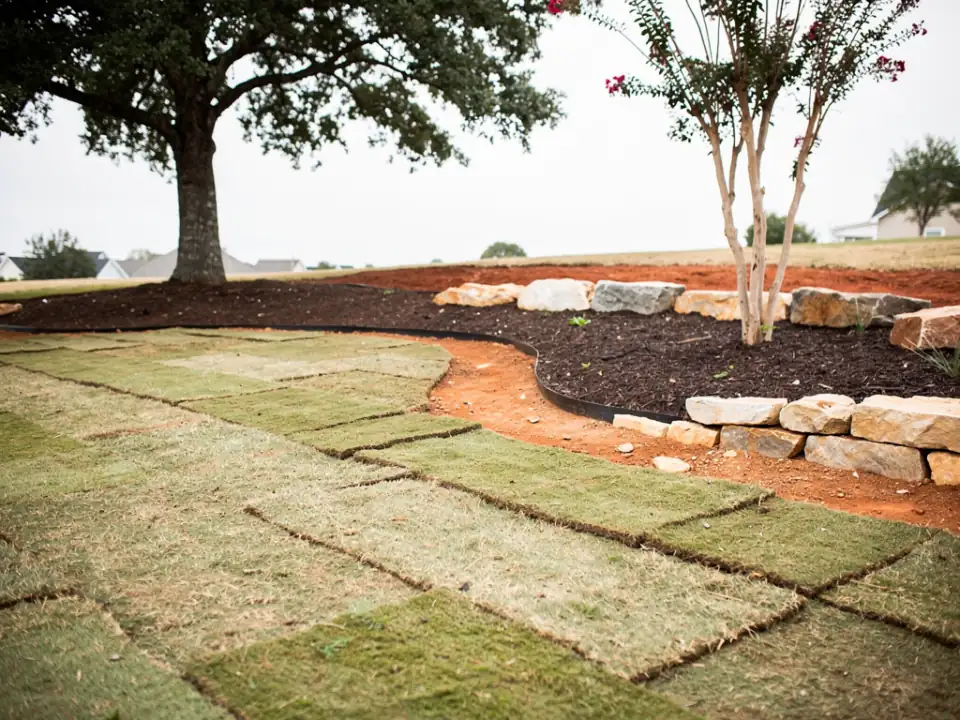
Old turf stripped, clay loosened and graded, fresh sod laid tight at the seams, and a watering plan to help it take.
- Owner on every job
- Licensed NC landscape contractor
- $2M general liability
- 2-year hardscape warranty
Sod installation in Charlotte, NC: what the job includes
Sod installation in Charlotte, NC is mostly about what happens before the first roll goes down. We strip the old lawn, break up the compacted clay underneath, shape the grade so water runs away from the house, and only then lay fresh sod in tight, staggered rows. The result is a finished lawn in a day or two instead of a season of waiting on seed.
Marcus Hale is on site for every job, and one crew does the whole install from tear-out to final roll. That matters on a sod job, because the person who graded the soil is the same person checking that the seams meet and the edges are cut clean.
- Removal of the existing turf and weeds with a sod cutter
- Loosening and raking the soil to a smooth, firm bed
- Grading for drainage away from the foundation
- Laying sod with staggered seams and cut edges along beds and walks
- Rolling the new lawn for good root contact
- A written watering plan for the first weeks
Fescue, bermuda or zoysia sod: which grass suits your yard
Charlotte is in the transition zone, so the choice of grass depends on your sun, your shade and how you use the yard. There is no single best sod here, and picking the wrong one for a shady lot is the most common reason a new lawn thins out within a couple of years.
- Tall fescue: stays green most of the year and handles partial shade, but it needs more water in July and August and can thin in hard summers
- Bermuda: very tough and fast to recover from wear, a good fit for full sun and busy family yards, and it turns tan in winter
- Zoysia: dense and soft underfoot, tolerates some shade better than bermuda, slower to spread, and also goes dormant in cold weather
Why soil prep matters so much on Charlotte red clay
Most yards in the Charlotte area sit on red clay. It holds nutrients well, but it packs hard, drains slowly, and turns to a slick paste after a summer storm. Sod rolled out on untouched clay tends to dry out on top while roots struggle to push down, and low spots collect water that rots the new grass.
We break up the surface, rake out rocks and old roots, and set a smooth grade with a gentle fall away from the house and toward where water should go. If the yard has a bigger drainage problem, such as a soggy corner or water against the foundation, we will point it out at the estimate so it can be fixed before the new lawn goes in.
What affects the cost of new sod
We price sod after measuring the yard on site, because two lawns of the same size can need very different amounts of prep. Your free estimate gives you a firm number for the whole job.
- Total square footage to be covered
- The grass type you choose
- How much old turf, weeds and debris has to come out
- Grading work needed to fix low spots or slope
- Access for pallets and equipment, such as narrow side gates or steep driveways
When is the best time to lay sod in Charlotte?
Timing follows the grass. Fescue sod roots best in the cooler months of fall and early spring, when nights are mild and it has time to settle before summer heat. Bermuda and zoysia are warm-season grasses, so they establish best from late spring through summer while they are actively growing.
We will recommend a window for your grass type at the estimate. Laying sod outside its best season can work, but it asks more of you on watering and gives the roots less room for error.
Caring for new sod after we leave
New sod needs water every day at first, enough to soak through the roll into the soil below. Over the next few weeks you cut back to deeper, less frequent watering as the roots take hold. Stay off the new lawn as much as you can, and hold off on the first mow until the sod no longer lifts when you tug a corner.
Our written warranties cover hardscape work and plants on properties we maintain, so we are straightforward about sod: how it takes depends mostly on watering in the first month. That is why every install ends with a clear schedule, and why many customers roll the new lawn into a weekly or biweekly lawn care contract once it is established.
How we do it, step by step
Step 1
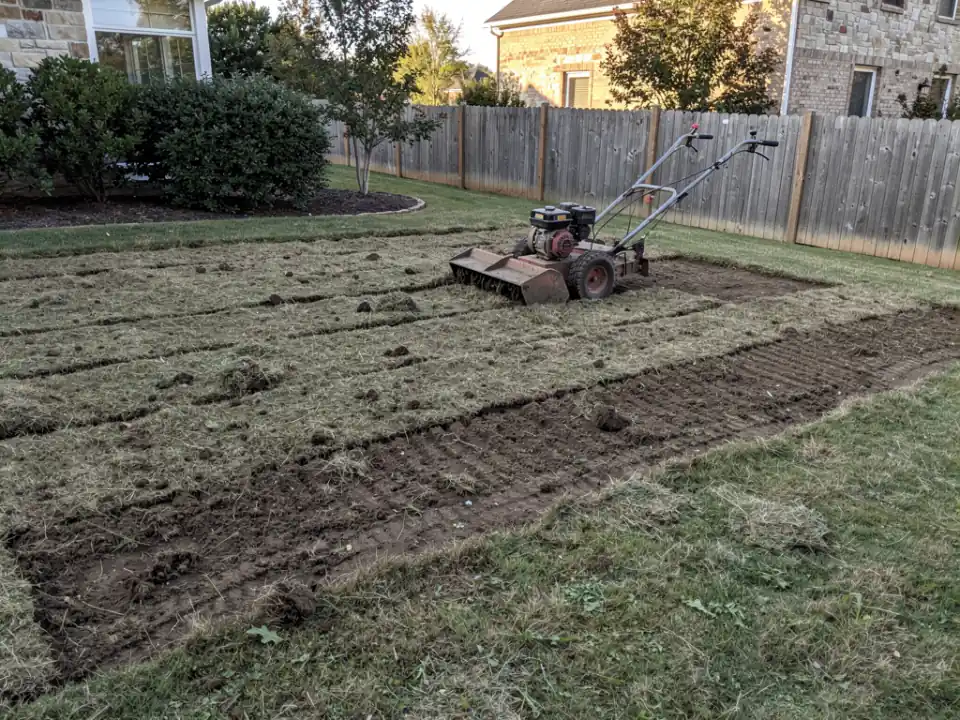
Strip the old lawn
We run a sod cutter across the old, patchy lawn and roll it up in strips. This clears the weeds and thin turf down to bare soil so nothing competes with the new grass.
Step 2
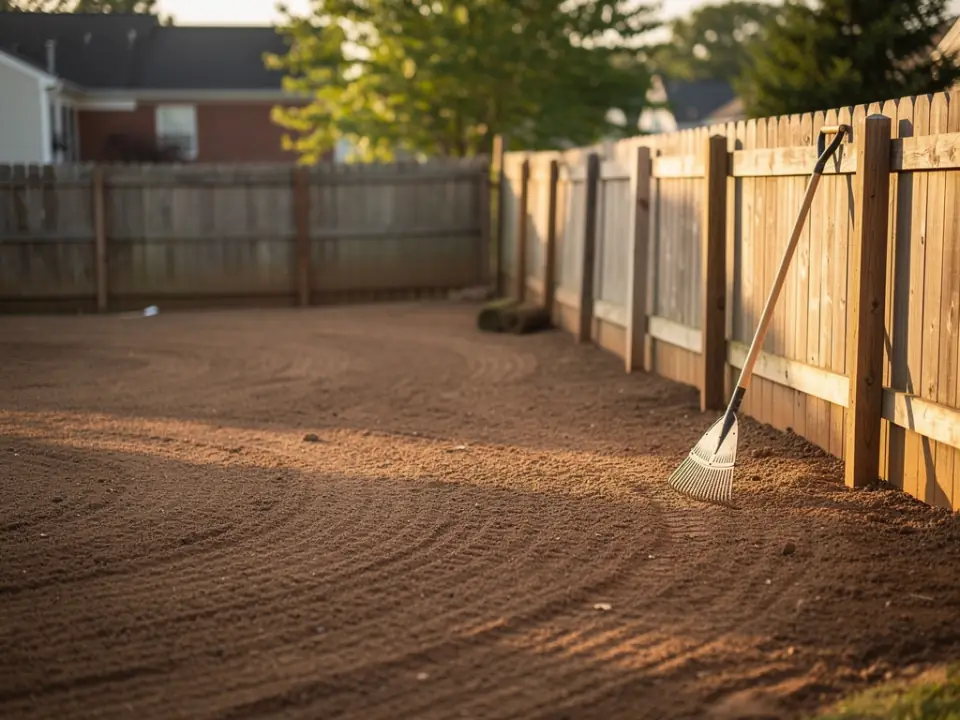
Grade and rake the soil
The bare clay is loosened, raked smooth and graded so water drains away from the house. We firm it so the finished lawn sits level, with no dips for water to pool in.
Step 3
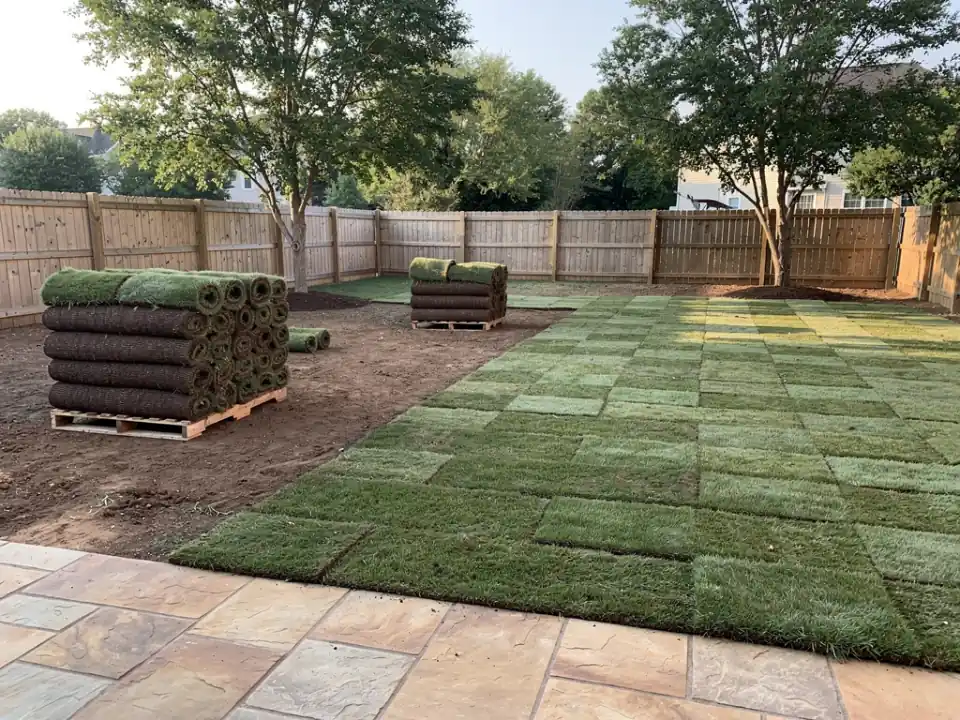
Lay the sod in staggered rows
Pallets of fresh sod are set out and laid in tight rows with staggered seams, like brickwork. Pieces are cut neatly to fit along beds, walks and curves.
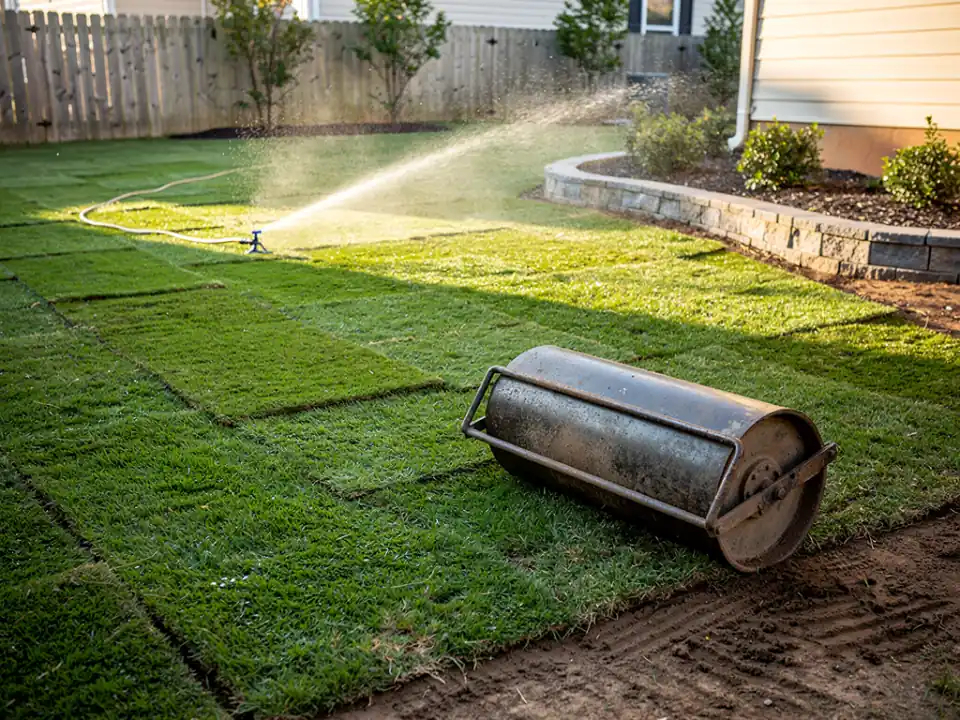
Step 4
Roll and water in
We run a lawn roller over the new sod to press the roots into the soil. Then the sprinklers go on for a first deep soak, and you get the watering plan for the weeks ahead.
Often built together
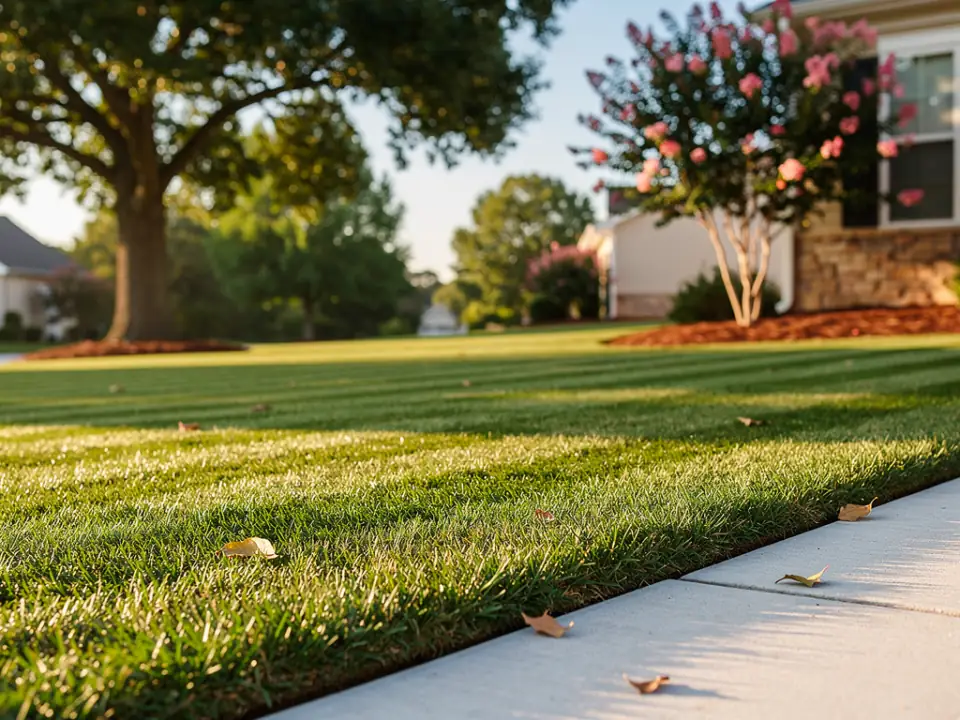
Lawn Care and Maintenance
Weekly or biweekly mowing, edging and seasonal care on a steady contract, from the same crew every visit.
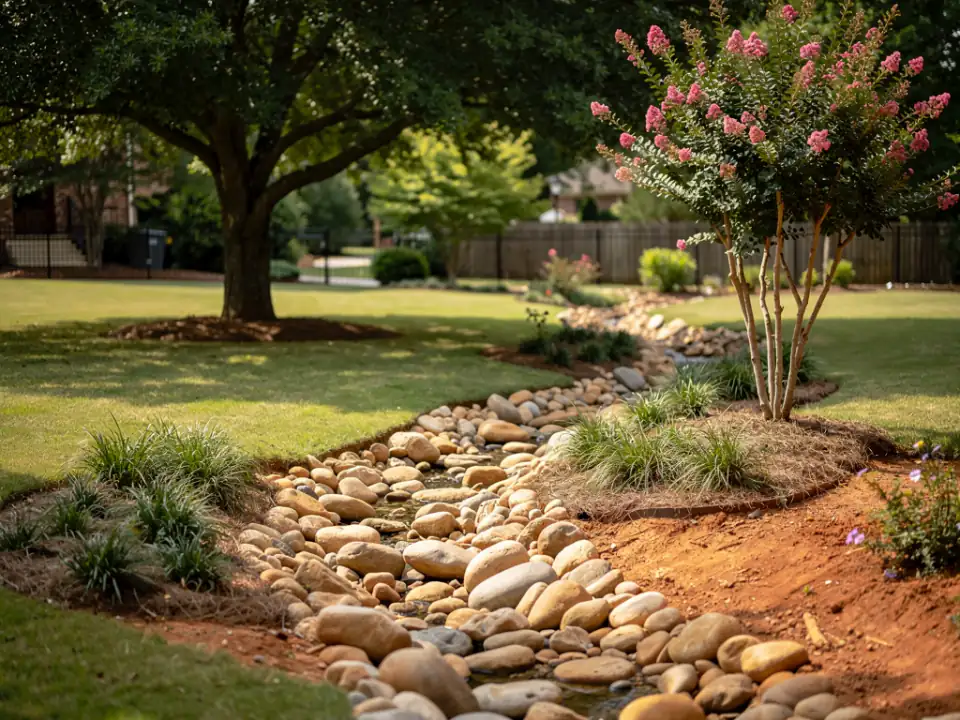
Drainage Solutions
French drains, grading and downspout extensions that move water away from your house and dry out soggy lawns.
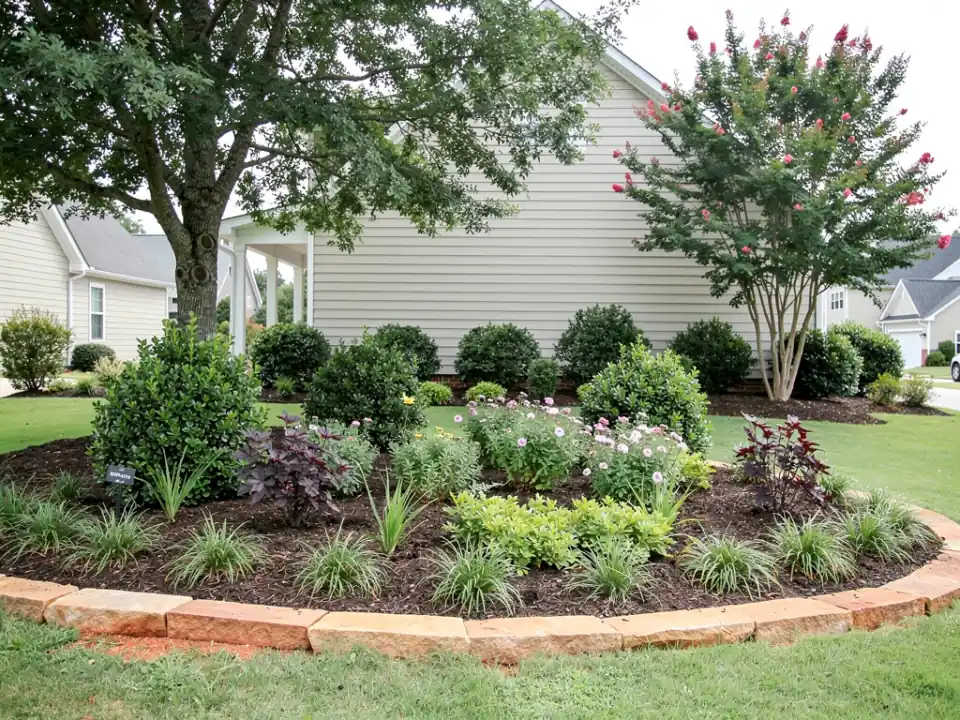
Landscape Design and Installation
New beds, planting and full front or back yard makeovers, designed and installed by one crew.
Sod Installation: common questions
Something else on your mind? Call (704) 555-0142.
Can I lay sod over dirt?
It needs prepared soil, not just bare dirt. Sod laid on hard, unloosened clay has trouble rooting, so we break up and grade the ground first.
Can sod go right on top of my old grass?
No. Laying over existing grass leaves a layer that blocks roots and rots underneath. We strip the old turf first on every job.
How long before I can walk on or mow new sod?
Keep foot traffic light for the first two to three weeks. Mow once the sod is rooted enough that it does not lift when you pull a corner.
What if it rains on install day?
Light rain is fine and even helps the sod settle. In heavy rain the clay gets too wet to grade properly, so we will reschedule to the next workable day.
How long does a sod installation take?
Most residential yards take one to two days from tear-out to the final roll. Larger lawns or yards with heavy grading can take a little longer.
Is new sod safe for pets?
Yes, the sod itself is fine for pets. Keep dogs off it for the first few weeks so digging and running do not tear up the seams before it roots.
Get a free estimate
Tell us about your sod installation project. We call you back within one business day to book a time on site.
- Call
- (704) 555-0142
- Hours
- Mon-Fri 7am-5pm, Sat 8am-12pm (estimates only), Sun closed