Owner on every job
Landscape lighting in Charlotte, NC
Low-voltage path lights, uplit trees and patio lighting, planned by day and aimed after dark.
- Owner on every job
- Licensed NC landscape contractor
- $2M general liability
- 2-year hardscape warranty
Landscape lighting in Charlotte, NC: what we install
We design and install landscape lighting in Charlotte, NC for homeowners who want to use and enjoy the yard after sunset. That usually means light along paths and steps so people can walk safely, a few fixtures that show off a tree, wall or the front of the house, and softer light around a patio or seating area.
We install low-voltage systems. A transformer plugs into an outdoor outlet and steps the power down, and cable runs out to each fixture just below the surface. A timer or dusk sensor turns the lights on at night and off later, so there is nothing to remember.
- Path lights along walks, drives and bed edges
- Uplights for trees, stone walls and the front of the house
- Step and wall lights built into retaining walls and patio steps
- Soft area lighting around patios, fire pits and seating
- Transformer, cable and timer or dusk sensor
Types of outdoor light fixtures and where each one works
Good lighting uses a handful of fixture types, each doing a specific job. The goal is to see where you are walking and to show the best parts of the yard, not to flood everything in bright white light.
- Path lights: short posts with a hood that throws light down onto the ground, spaced so the walk reads as one line of light
- Spot and flood uplights: set at the base of a tree or wall and aimed up to light the trunk, canopy or stone face
- Well lights: buried flush with the ground, useful in lawns where a fixture would be in the way of the mower
- Hardscape lights: small fixtures tucked under wall caps or into step risers, so they disappear by day
- Downlights: mounted high in a tree to cast a soft pool of light onto a patio or lawn below
Brass or aluminum fixtures in Charlotte's humid climate
Fixture material matters more than most people expect. Our summers are hot and humid, beds get watered often, and fixtures sit in mulch that stays damp. Solid brass and copper fixtures darken to a brown patina and hold up well in those conditions. Painted aluminum fixtures cost less up front, but the finish can chip and corrode over time, especially at ground level.
Warm white LED lamps suit most yards. They use far less power than older bulbs, run cool, and give the warm tone that looks right on brick, stone and trees. We will walk you through the options at the estimate.
What affects the cost of landscape lighting
Every system is priced after Marcus walks the property with you, ideally late in the day so you can talk about what you want to see at night. The free estimate covers the full install.
- Number of fixtures and how they are spread around the yard
- Fixture type and material
- Transformer size, based on the total load of the system
- Length of cable runs and whether they cross lawn, beds or hardscape
- Adding lighting into an existing patio or wall rather than during a new build
Adding lighting during a patio or wall build, or later
The easiest time to add lighting is while we are building a paver patio or retaining wall. The ground is already open, cable can be run under the base, and wall and step lights can be set as the stones go in. If you are planning a hardscape project, it is worth talking about lighting at the same estimate.
We also light finished yards. Cable is fed through beds and lawn with a narrow trench that is closed up the same day, and we route around mature roots, irrigation and existing hardscape. Before anything is dug we mark every fixture spot and call for utility locates.
Looking after your lighting through the year
Low-voltage lighting needs little care, but a few habits keep it looking right. Trim back shrubs as they grow so they do not bury path lights, wipe off lenses in the spring when pollen coats everything, and nudge any fixture that gets knocked by a mower or a dog. After a summer storm or power cut, check that the outdoor outlet has not tripped and reset the timer if it lost its setting.
As trees and planting fill in, the aim of a light that looked perfect in year one can drift. We are happy to come back out, see the yard at night, and re-aim fixtures as the landscape matures.
How we do it, step by step
Step 1
Lay out the fixtures
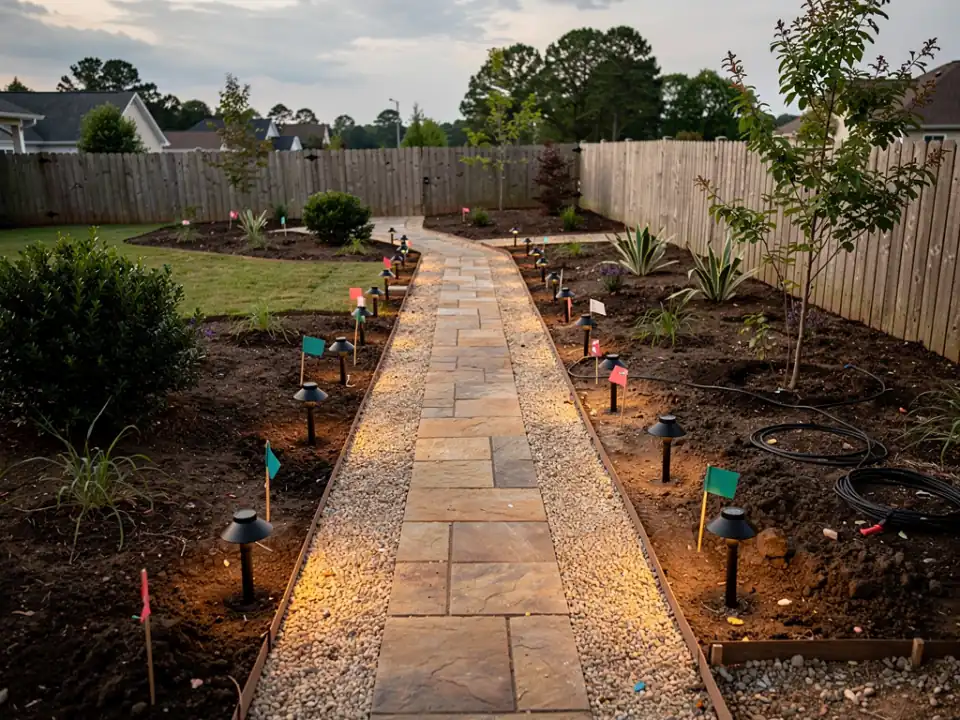
At dusk we set each unlit fixture where it will go along the path and mark the spot with a flag. This lets you see the plan in place before any digging starts.
Step 2
Run the cable
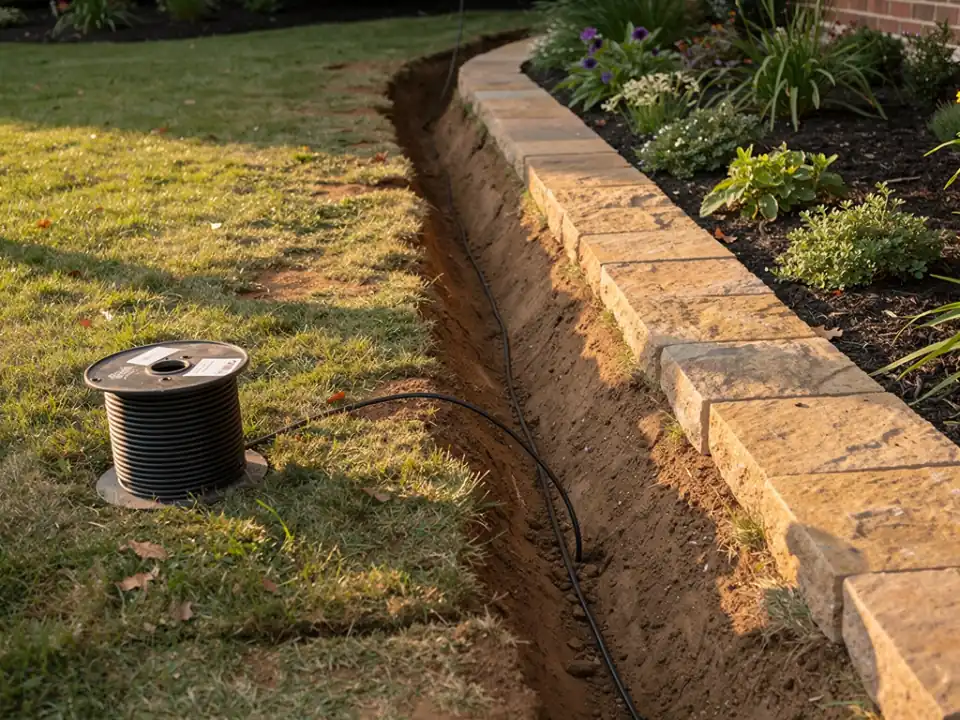
A shallow trench is cut along the bed edge and low-voltage cable is laid in from the spool. We keep the runs tidy and close the trench once each fixture is connected.
Step 3
Set the fixtures
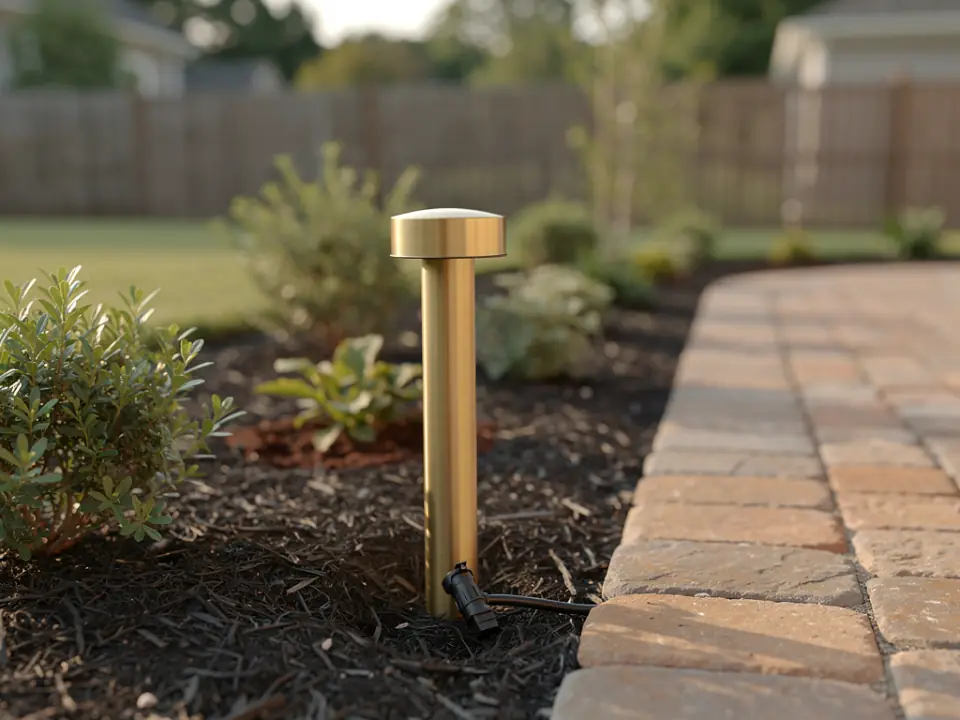
Each light is set firmly in the bed at the right height, like this brass path light in the mulch beside the stone walk. The fixtures are connected, tested and left level.
Step 4
Aim after dark
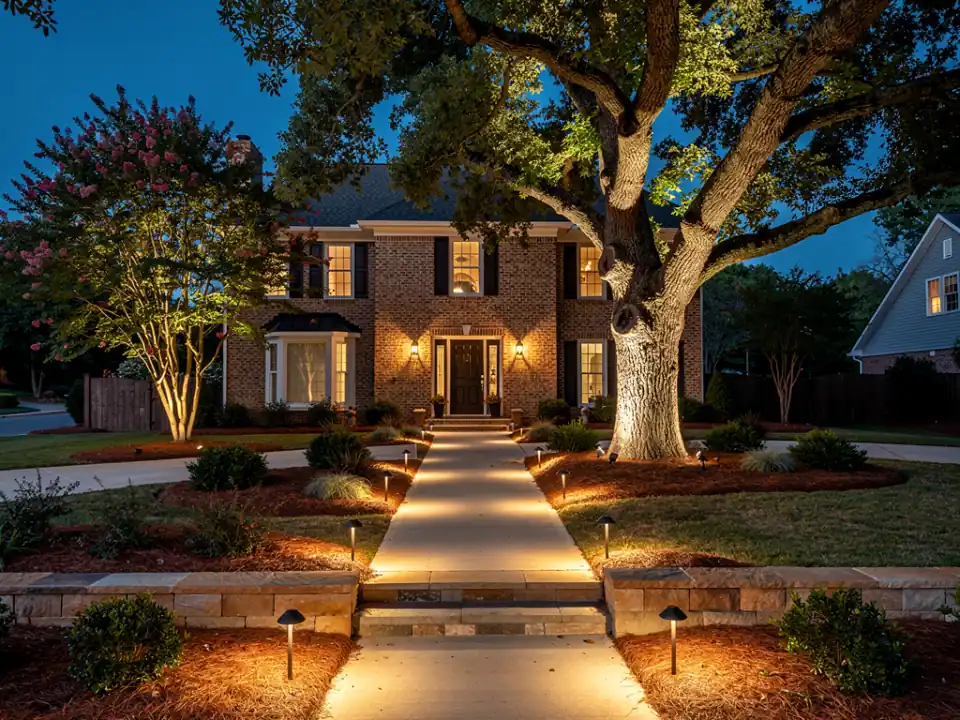
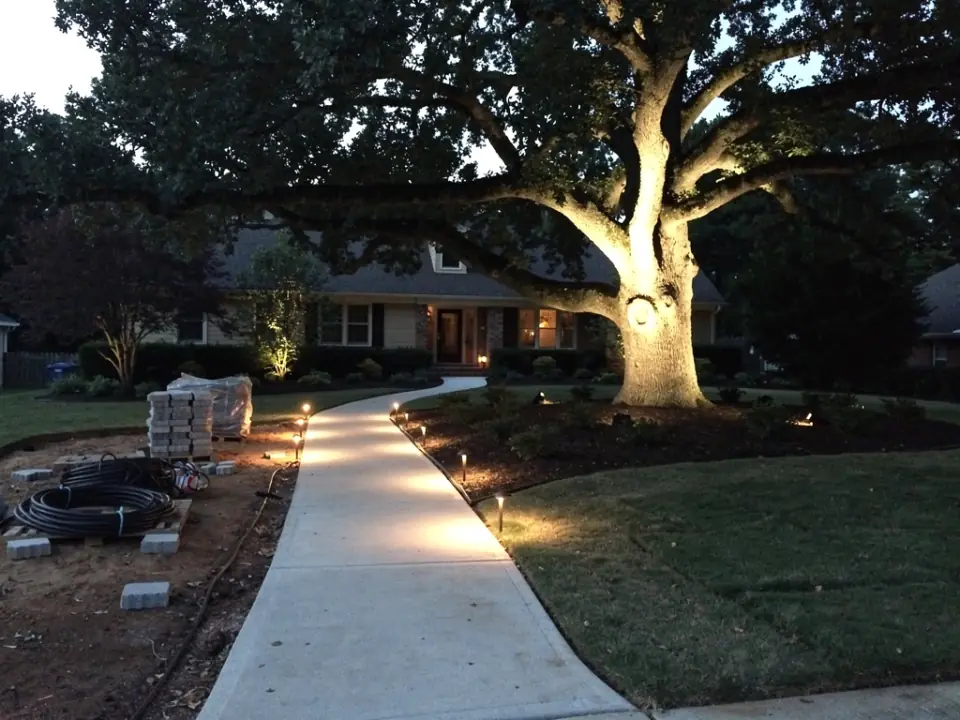
We come back once it is fully dark to aim every light by eye. The oak is uplit from below and the path lights throw a warm, even glow along the front walk.
“The lights make the house look like a different place at night. Marcus came back after dark to aim every fixture himself.”
Often built together
Patios and Pavers
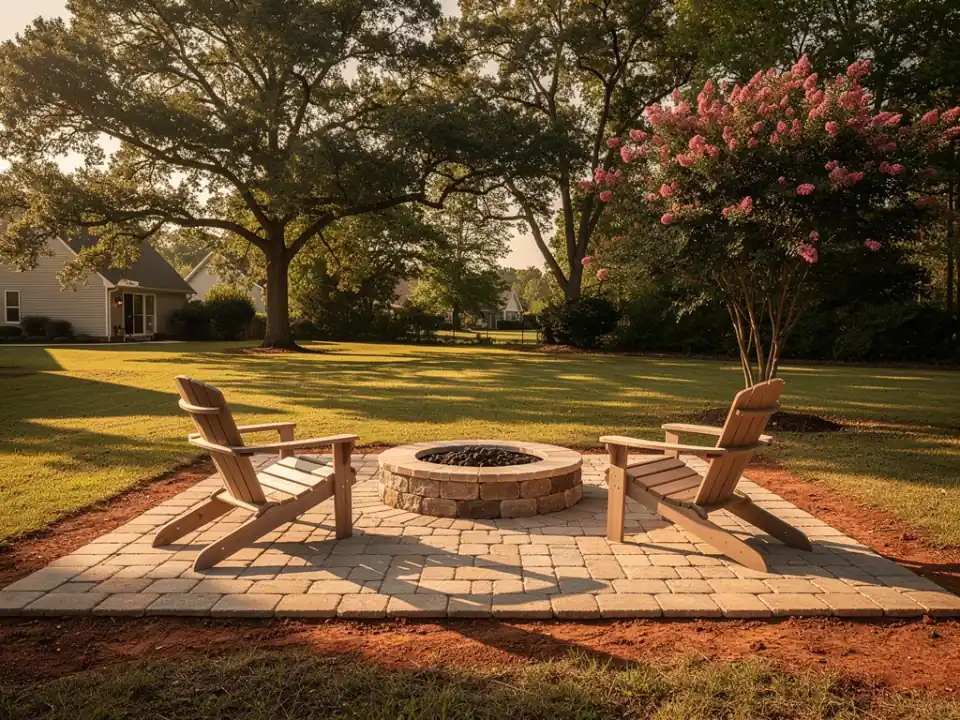
Paver patios, walkways and fire pit areas, built on a compacted base that holds up to Charlotte red clay.
Retaining Walls
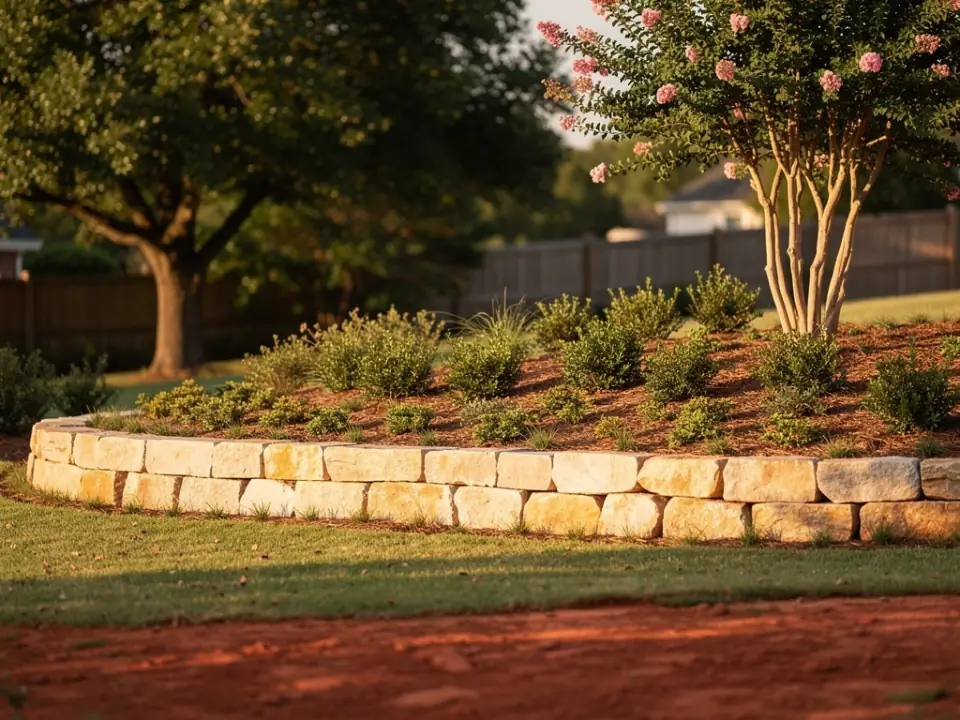
Block and natural stone walls that hold back sloped yards and give you flat, usable ground.
Landscape Design and Installation
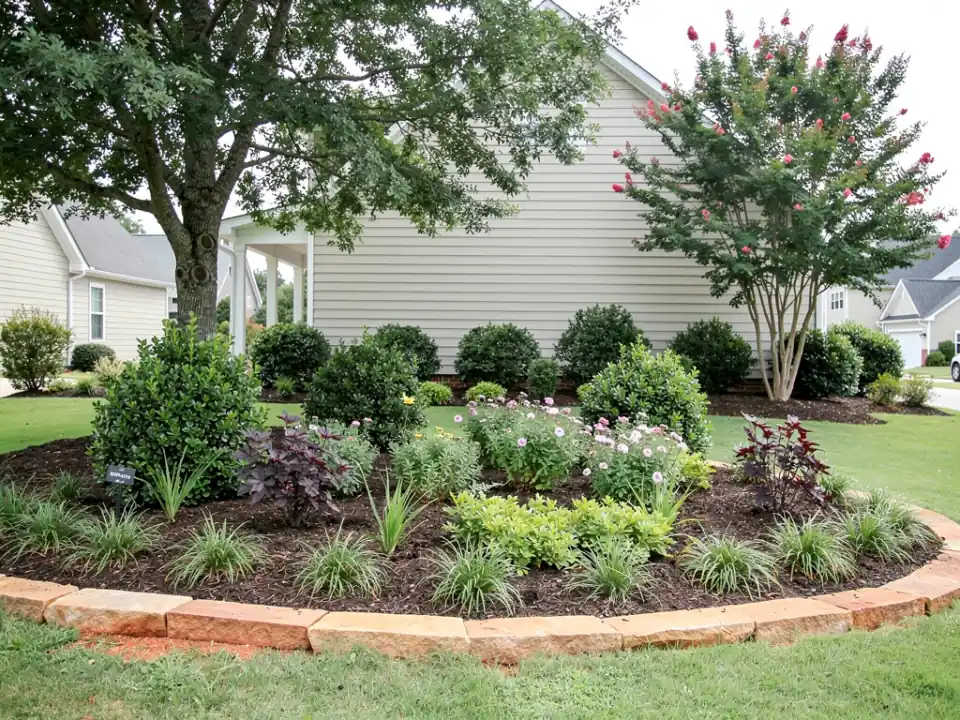
New beds, planting and full front or back yard makeovers, designed and installed by one crew.
Landscape Lighting: common questions
Something else on your mind? Call (704) 555-0142.
Can you add lighting to a patio that is already built?
Yes. We plan fixture spots and cable routes around the existing patio and walls, and use small hardscape lights where they fit.
How long does a landscape lighting install take?
Most front yard systems take one to two days, including the return visit after dark to aim the lights. Larger properties take longer.
Will the lights come on by themselves?
Yes. The transformer runs on a timer or a dusk sensor, so the lights switch on at night and off at the time you choose.
Is low-voltage lighting safe around kids and pets?
Low-voltage systems run at a much lower voltage than your house wiring, which is one reason they are the standard for yards. Cable sits just below the surface in beds and lawn.
What happens to the lights in heavy rain or a storm?
Outdoor fixtures are made to handle rain. After a big storm, check the outdoor outlet has not tripped and that no fixture was knocked out of line.
What time of year is best to install lighting?
Lighting can go in any time of year the ground is not frozen. Many homeowners add it in the fall, when evenings get dark earlier and the yard is still in use.
Get a free estimate
Tell us about your landscape lighting project. We call you back within one business day to book a time on site.
- Call
- (704) 555-0142
- Hours
- Mon-Fri 7am-5pm, Sat 8am-12pm (estimates only), Sun closed