Walls from $4,000. 2-year workmanship warranty
Retaining walls in Charlotte, NC
Block and natural stone walls that hold back sloped yards and give you flat, usable ground.
- Owner on every job
- Licensed NC landscape contractor
- $2M general liability
- 2-year hardscape warranty
Retaining wall builders in Charlotte, NC for sloped yards
Our retaining wall work in Charlotte, NC is about turning a slope you mow sideways into ground you can actually use. Much of the area sits on rolling land, and plenty of lots fall away from the house or climb toward the back fence. A well-built wall holds that soil in place, stops it washing onto patios and driveways, and gives you a flat terrace for lawn, planting beds or a patio.
We build block and natural stone walls, from low garden walls that edge a bed to taller walls that hold back a hillside. Marcus Hale is on site for every wall, and the same crew that digs the footing sets the last capstone.
If you are not sure whether your slope needs a wall at all, that is a fair question to ask on the estimate visit. Sometimes regrading or planting does the job for less.
- Terrace walls that level a sloped back yard
- Low walls that edge raised planting beds
- Walls beside driveways and walkways where a bank is slipping
- Seating walls around a patio or fire pit
- Stepped walls that follow a slope in two or more tiers
Block or natural stone: which retaining wall is right for you?
Segmental block is made to stack. Each unit has a lip or pins that set it slightly back from the course below, so the wall leans into the hill the way it should. Block gives crisp lines, even color and predictable costs, and it suits taller walls because the system is designed for height.
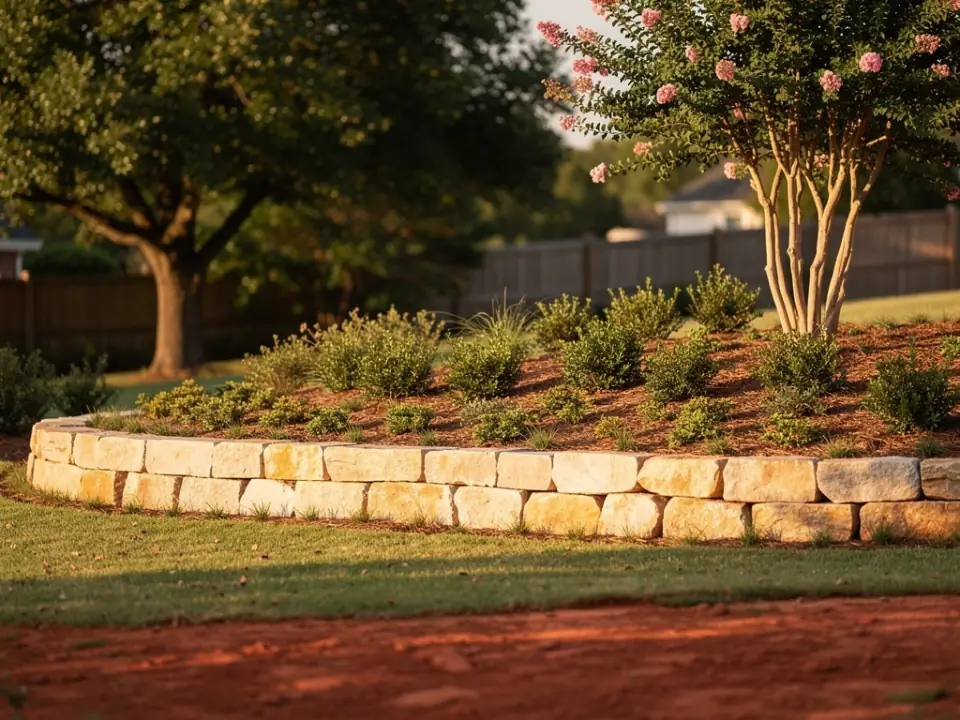
Natural stone is laid by hand, piece by piece. It looks older and softer, fits cottage gardens and planted slopes, and weathers gracefully. It takes longer to build and costs more for the same area of wall face, so we usually suggest it for lower walls and garden edges you will see up close. We bring samples of both so you can compare them next to your house.
Whichever face you choose, the structure behind it is built the same way: same footing, same drainage, same compaction. The material changes the look and the budget, not the engineering underneath.
What does a retaining wall cost in Charlotte?
Retaining walls start at $4,000. The final number comes down to the factors below, all of which we measure on the estimate visit.
We break the estimate into these parts so you can weigh options side by side, such as one tall wall against two shorter terraces.
It is worth asking how the price changes if the wall moves a few feet up or down the slope. Shifting the wall line can reduce its height and the amount of soil that has to move, which often matters more to the total than the choice of material.
- Length and height of the wall, measured as square feet of face
- Block or natural stone, and the style of the caps
- How much soil has to be cut, moved or brought in
- The drainage the wall needs behind it
- Access: a tight side yard means more work by hand
Why drainage and the footing decide how long a wall lasts
Most retaining walls that fail do not fail because the blocks break. They fail because water builds up behind them. Red clay drains slowly, and a heavy summer storm can saturate the soil behind a wall and add a lot of weight in a few hours. With no way out, that water pushes the wall forward until it leans or bulges.
So every wall we build gets a perforated drain pipe at the base, washed drainage stone packed behind the courses, and an outlet that carries the water away. Below ground, the wall sits on a trench of compacted gravel cut dead level, with the first course partly buried so the base cannot slide. Taller walls can need extra reinforcement tied back into the hill, and we tell you if yours does.
On clay slopes that already show seeping or soft ground, we may run the drain pipe past the ends of the wall so the water discharges well clear of it.
Permits, what is included and the warranty
Walls above a certain height usually need a permit, and sometimes an engineered design. We check your wall against local rules during the estimate and tell you before any work starts if your project needs a permit.
Each wall includes excavation, the gravel footing, drain pipe and drainage stone, the block or stone itself, capstones, backfill, final grading and clean-up. Walls we build carry a 2-year workmanship warranty, and Marcus walks the finished wall with you before we call the job done.
Before digging, we have utility lines marked through the 811 locate service and plan where soil and block deliveries will land so your driveway stays usable.
How long a wall takes and caring for it afterward
A typical home retaining wall takes from a few days to a couple of weeks, depending on length, height and material. The first day or two is digging, which is the loudest and messiest part. Soil that comes out is either reused behind the wall or hauled away, and we tidy the site at the end of each day.
Once the wall is up, keep gutters and downspouts from dumping water directly behind it, keep the drain outlet clear of leaves and mulch, and avoid planting large trees right at the top. Walk along the wall after big storms in the first year; if anything looks out of line, call us.
If you plan to plant above or in front of the wall, pick shrubs and perennials with modest roots and leave a little gap between them and the stone. Keep soil and mulch from being heaped against the back of the caps, where they hold moisture.
How we do it, step by step
Step 1
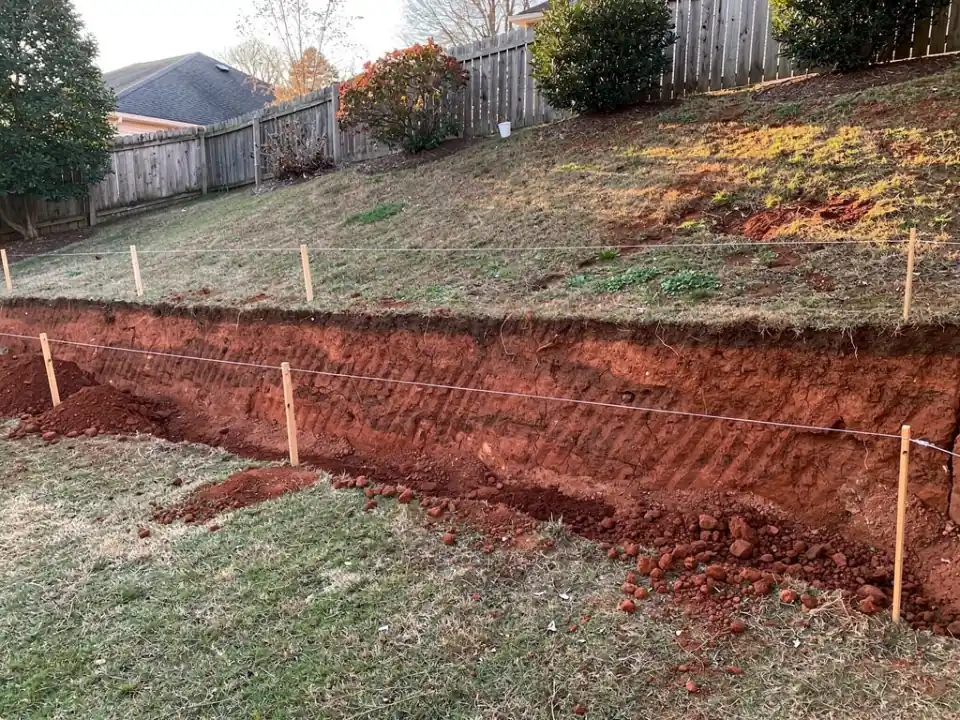
Cut a level footing trench
We dig a trench along the base of the slope and set string lines to hold the line and height of the wall. The trench is cut level into the red clay so the wall starts on even ground.
Step 2
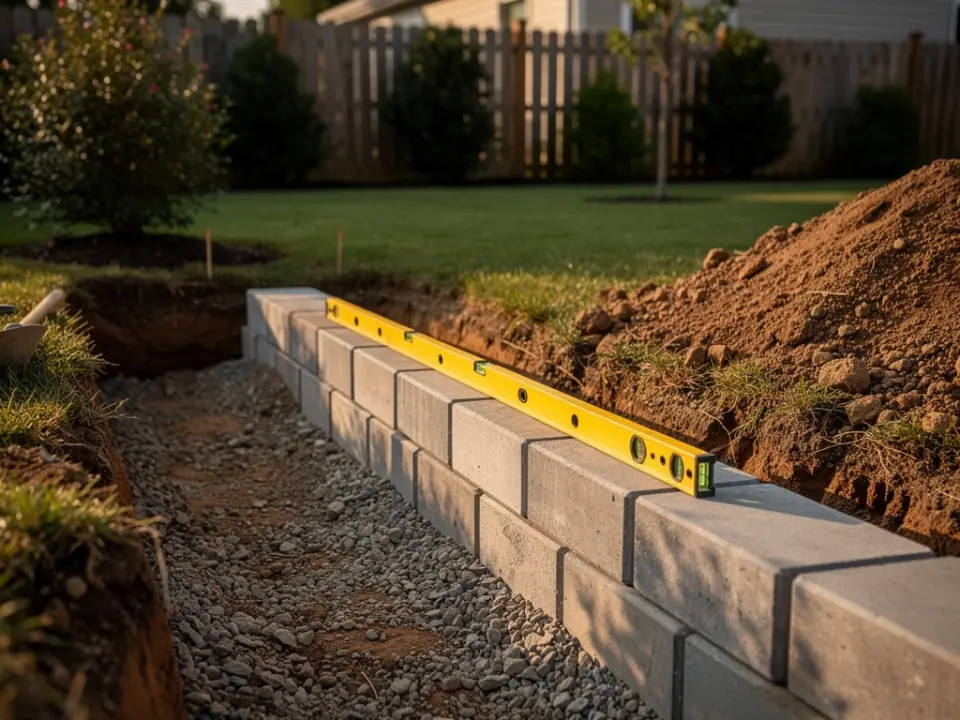
Set the first course on gravel
The trench is filled with compacted gravel, and the first row of blocks is set on it and checked with a spirit level. This course matters most, because every row above follows it.
Step 3
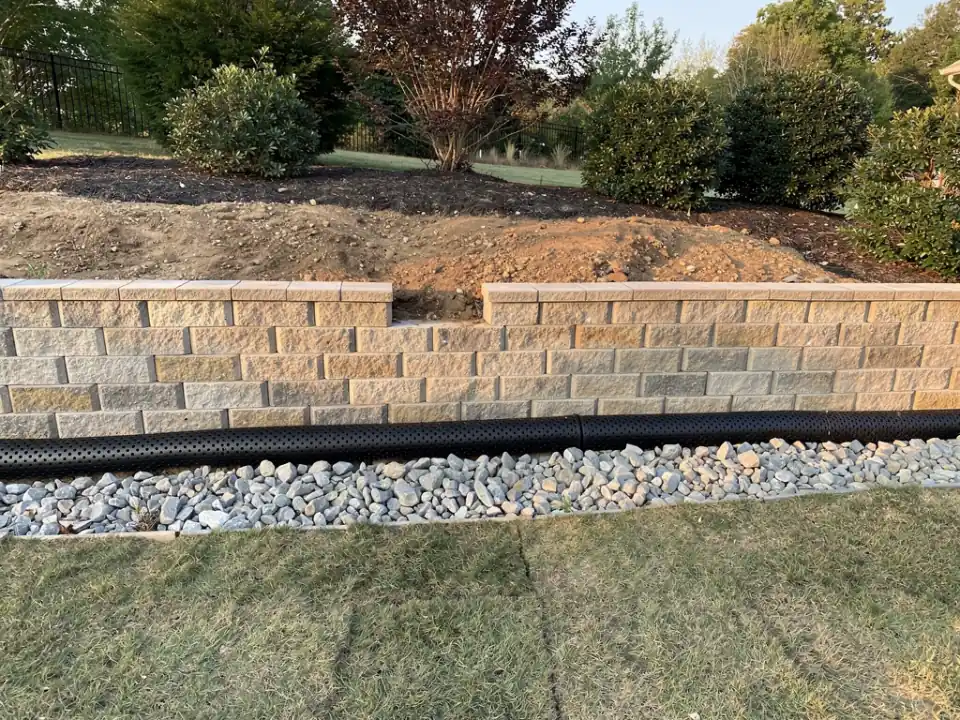
Build up with drainage behind
As the wall rises, we lay perforated drain pipe at the base and fill behind the blocks with washed drainage stone. The stone and pipe give storm water a way out instead of letting it press on the wall.
Step 4
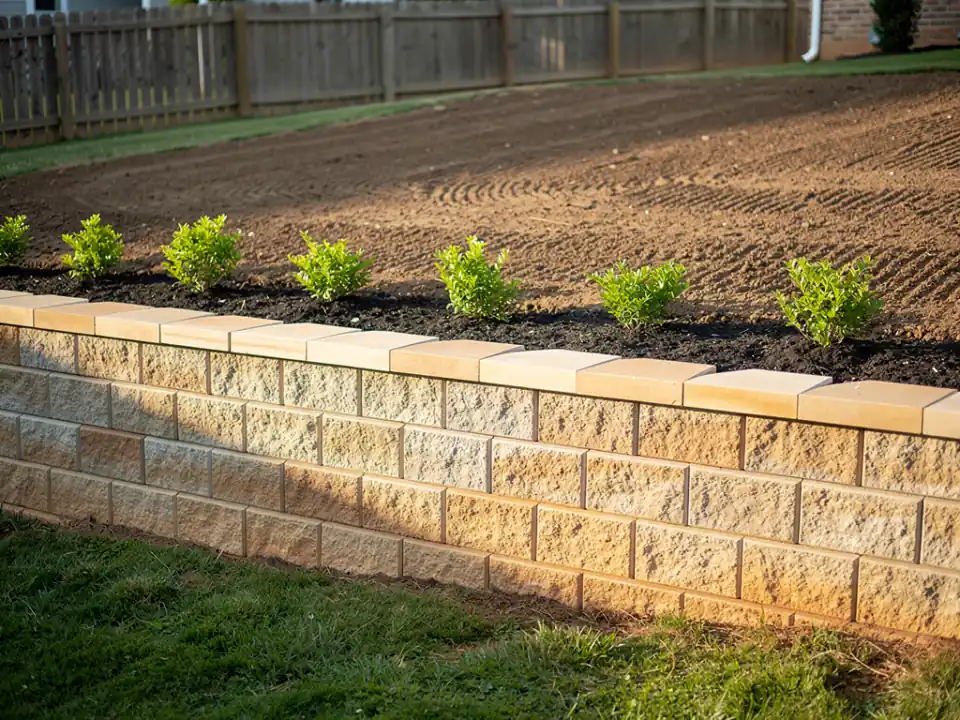
Cap, grade and plant
We fix the capstones in place and grade the soil above so it sheds water. If planting is part of the plan, new shrubs go into the level ground at the top.
“Our back slope used to wash onto the patio every storm. The wall they built has been through two summers of Charlotte downpours without moving an inch.”
Often built together
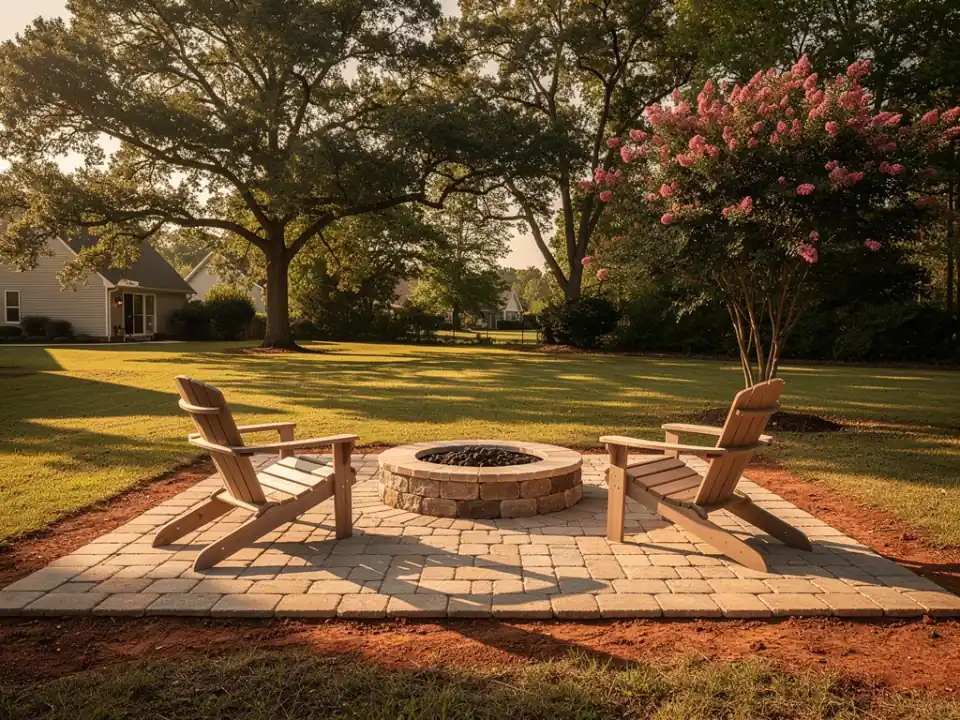
Patios and Pavers
Paver patios, walkways and fire pit areas, built on a compacted base that holds up to Charlotte red clay.
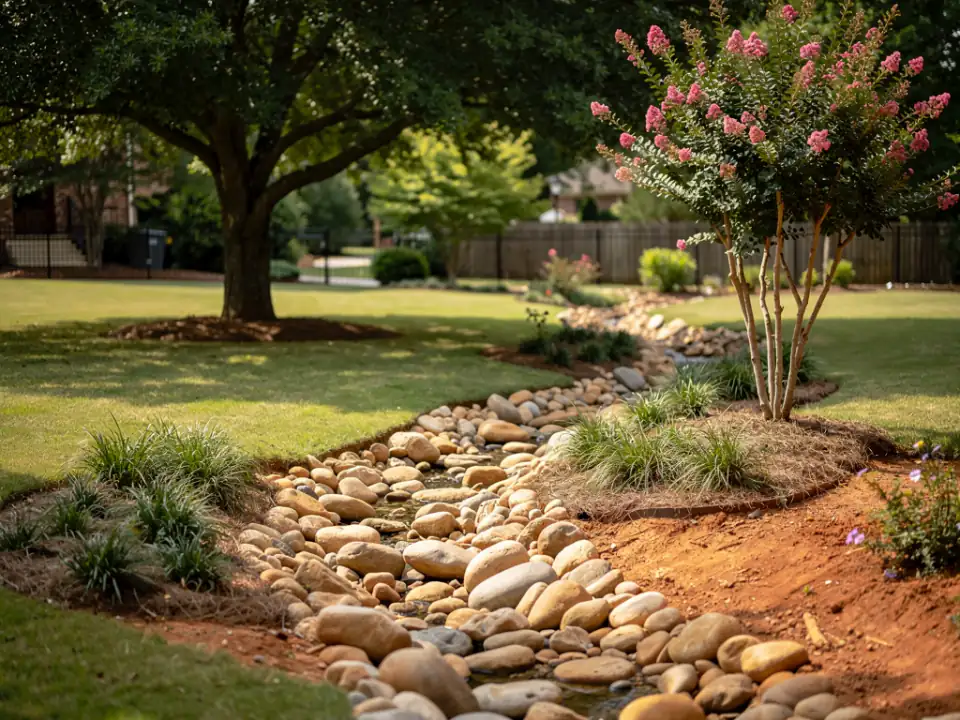
Drainage Solutions
French drains, grading and downspout extensions that move water away from your house and dry out soggy lawns.
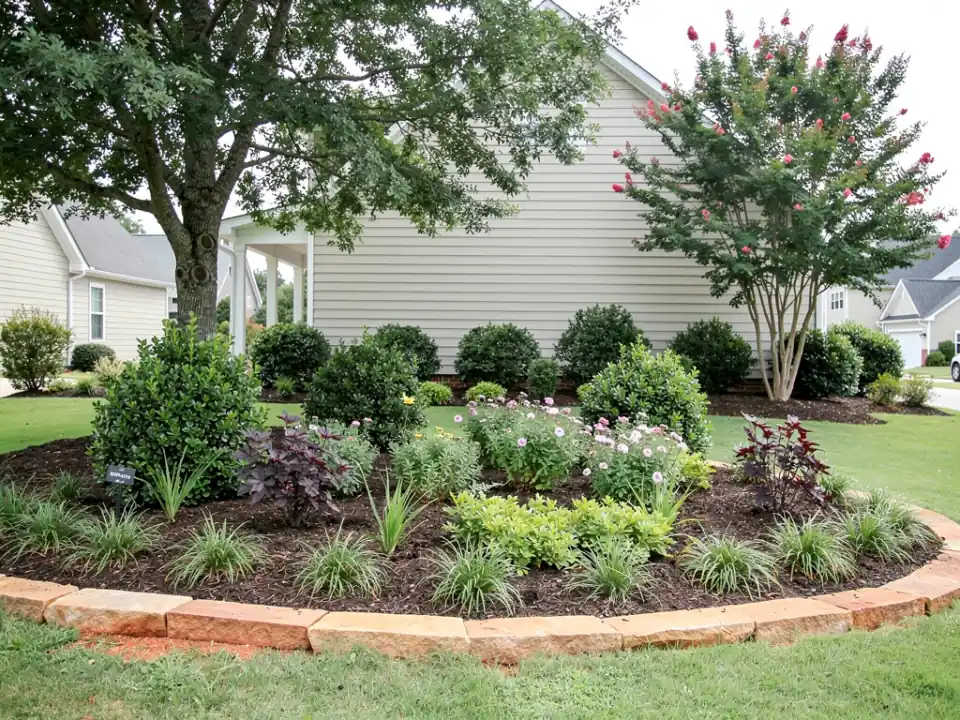
Landscape Design and Installation
New beds, planting and full front or back yard makeovers, designed and installed by one crew.
Retaining Walls: common questions
Something else on your mind? Call (704) 555-0142.
How tall can a retaining wall be?
It depends on the material, the soil and the slope, and taller walls need more engineering. We recommend a height on site, and sometimes two shorter terraced walls work better than one tall one.
Does my HOA need to approve a retaining wall?
Often, yes, especially where the wall can be seen from the street. We can share the material, height and layout details your HOA will ask for.
How long does a retaining wall last?
A wall on a solid footing with proper drainage should last for decades. Our workmanship on every wall is covered for 2 years.
Which costs less, block or natural stone?
Block usually costs less for the same size of wall because it goes up faster. Natural stone takes more hand work, which shows in the price.
When is the best time to build a retaining wall?
We build walls through most of the year. Very wet spells slow digging in clay, so we schedule around heavy rain rather than work in mud.
Do I need to be home while you build?
No. Once the plan is agreed, we only need access to the yard. Marcus keeps you updated and walks the finished wall with you.
Get a free estimate
Tell us about your retaining walls project. We call you back within one business day to book a time on site.
- Call
- (704) 555-0142
- Hours
- Mon-Fri 7am-5pm, Sat 8am-12pm (estimates only), Sun closed